
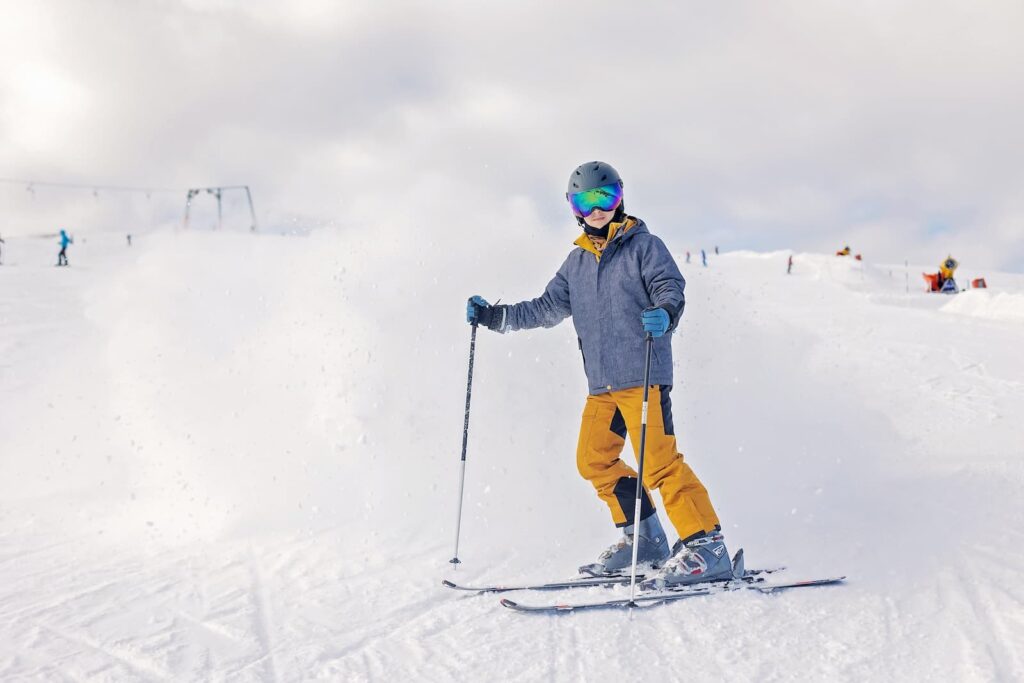
You love skiing and snowboarding, the feel of the wind in your hair, and the feel of skis sliding over the snow as you travel down the mountain. Most recreational skiers hit speeds between 10 and 20 miles per hour, while snowboarders can hit an average speed of around 25 miles per hour. If you fall or hit something at these speeds, it’s possible to suffer some serious injuries. It’s time to look at the ins and outs of wearing a helmet while skiing or snowboarding.
Why Wear a Helmet for Snowboarding?
Most of the ski areas that allow snowboarding will not require you to wear a helmet or any other type of safety gear. Between 2008 and 2019, the National Electronic Injury Surveillance System (NEISS) determined that there were more than 156,000 injuries directly related to skiing, snowboarding, and snowmobiling. You can become seriously injured when you fall or hit something while moving as fast as you do on a snowboard, and if it’s your head, you might find yourself faced with extensive trauma. It’s always best to err on the side of caution and wear a helmet to protect yourself.
Why Helmets Are Important for Skiing
Like snowboarding, you will not be required by most ski resorts to wear a helmet while skiing. According to Johns Hopkins Medicine, almost 20 percent of the 600,000 head injuries that they treat each year come from skiing accidents. Skiing accidents occur all the time, and you want to protect yourself by wearing a helmet while on the slopes. Protecting your head and avoiding a brain injury can minimize your injuries if you’re in a ski accident.
Risks of Skiing or Snowboarding Without a Helmet
Skiing is considered an extreme sport, especially if you’re using steep slopes or skiing in the backcountry. For this reason, you should not consider skiing without a helmet to be safe. You run the risk of falling or colliding with something or someone and receiving a serious head injury at the fast speeds involved. Ski Safety U.S. is backed by the National Ski Area Association, which says that someone who is skiing should wear a helmet at all times. They go further and state that you should ski as if you aren’t wearing a helmet, which is a nice way of saying, be careful and cautious.
Are Ski Helmets and Snowboard Helmets the Same?
According to REI, most ski and snowboard helmets are similar, and you can use them interchangeably. When you’re looking at helmets, you should choose one that’s approved and certified with ASTM F2040. The helmet is made up of two main parts, the shell and the inner liner. You need to choose a helmet that fits snugly but not too tightly, and if it can rock back and forth, it isn’t tight enough.
Tips for Wearing a Ski Helmet Correctly
Skiing is something you do in cold weather, so you might consider wearing a hat under your ski helmet. Most of the time, you should not wear a thick hat underneath your helmet. It can affect the fit and effectiveness of the helmet. You can, however, wear a thin moisture-wicking hat, such as a skull cap or balaclava, as long as they don’t make the helmet feel too tight.
With or without a helmet, you might get hurt while skiing or snowboarding. You may need immediate medical attention. At Middle Park Health, we’re here to meet all of your healthcare needs. After your accident, come to our new Fraser campus immediately.
Image Credit: Tomsickova Tatyana // Shutterstock